Travel guide
How to Get to Ilha Grande
from Rio de Janeiro
Everything you need to know about the journey — transport options, ferry info, real prices and the mistakes most tourists make.
Everything you need to know about the journey — transport options, ferry info, real prices and the mistakes most tourists make.
Ilha Grande is one of Brazil's most spectacular islands — 106 beaches, dense Atlantic Forest, and a complete ban on cars. Getting there from Rio de Janeiro takes about 3h30 door to door: a road trip down the Costa Verde coast followed by a 30-minute boat crossing.
The journey isn't complicated, but getting it wrong means missing your ferry or paying twice what you should. This guide covers everything, honestly.
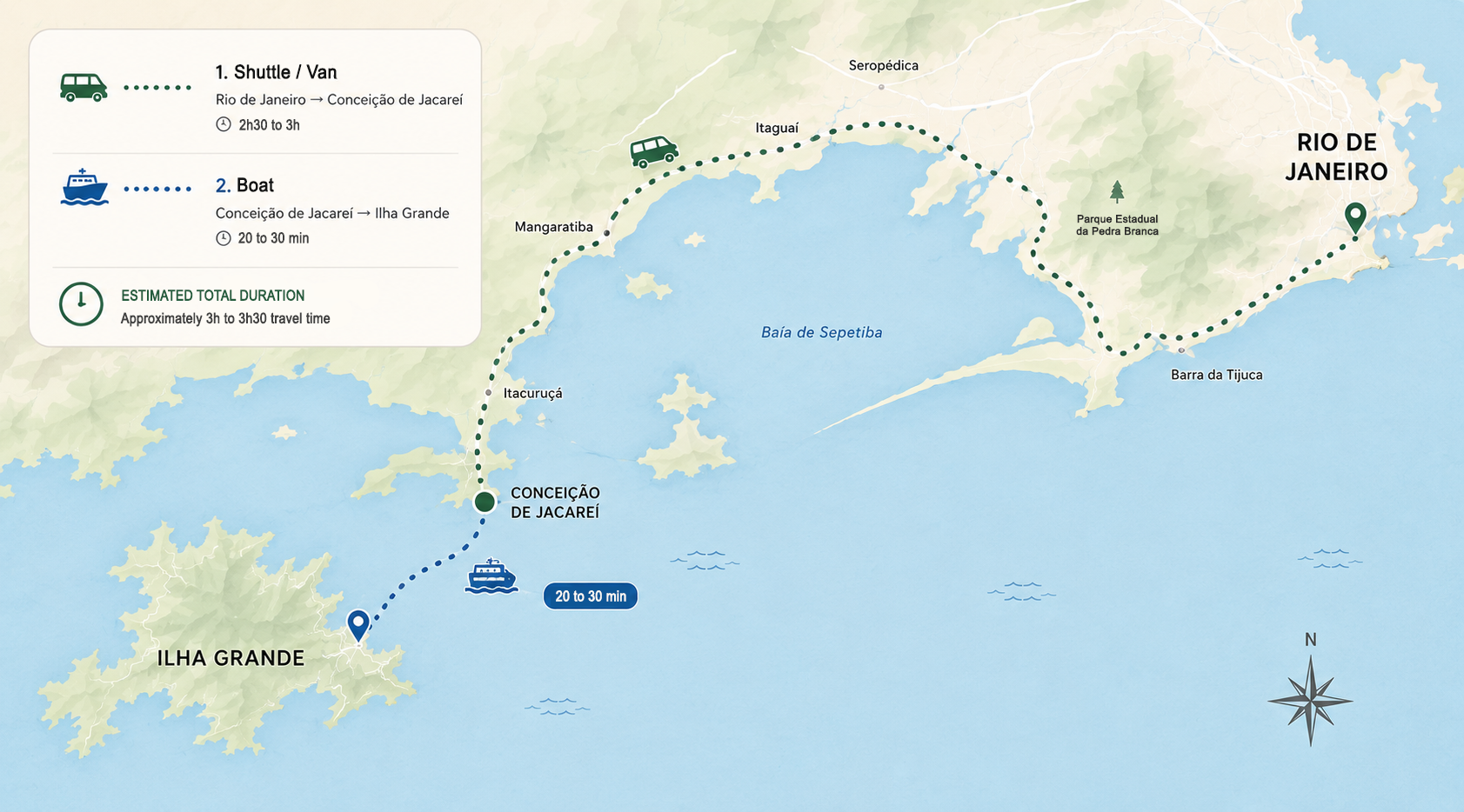
Ilha Grande is only accessible by boat. The nearest ferry terminal is at Conceição de Jacareí, a small pier on the Costa Verde coast, roughly 150 km south of Rio. Getting there is the main planning challenge for most travelers.
You have three options:
A shared van picks you up directly from your hotel in Rio — Ipanema, Leblon, Copacabana, Barra da Tijuca, the airports — and drives you straight to the terminal at Conceição de Jacareí. Your boat ticket is included. Fixed departure times, English-speaking support, and nothing to figure out on arrival. From R$280/person one way, or R$550–600 for a round trip. This is by far the simplest option for foreign travelers.
An Uber from Rio to the terminal costs roughly R$320–380 one way — but that's just the car ride. You still need to buy your boat ticket separately at the pier, which adds to the total. When you add it all up, you end up paying more than a shared van, with no support if anything goes wrong. The bigger problem: for a 150 km ride, drivers frequently cancel last minute, especially during early morning departures. It can work, but it's unreliable and ends up costing more.
Technically possible, but not recommended for most visitors. The journey involves multiple connections from Rio's Rodoviária Novo Rio bus terminal, takes 4–5 hours with transfers, and the buses don't drop you directly at the ferry terminal. Signage is in Portuguese only, and missing a connection means missing the boat. If you're a seasoned independent traveler comfortable navigating Brazilian bus systems, it's the cheapest option — otherwise the time and stress saved by booking a transfer are well worth it.
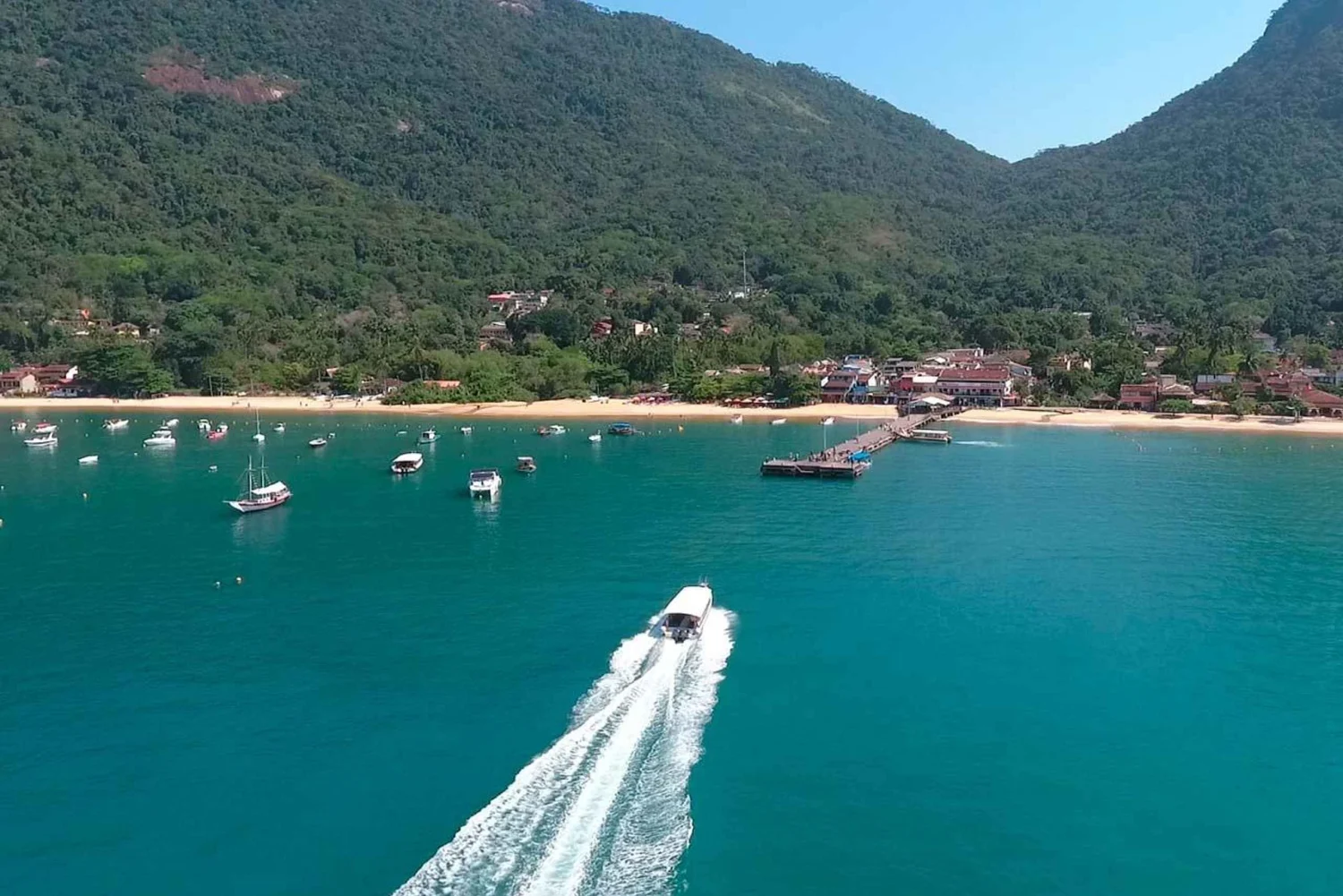
Once you reach the terminal at Conceição de Jacareí, it's a 30-minute boat crossing to Vila do Abraão — Ilha Grande's main village and the arrival point for everything on the island. The crossing is short and, on a clear day, genuinely beautiful.
If you've booked through TransferIlha, your ticket is already included and the van arrival is timed to connect directly with the crossing — no waiting at the dock, no separate queue. If you're organising independently, you'll need to buy a ticket at the pier. Note that the public ferry from Angra dos Reis (the larger town nearby) is another option but takes around 1 hour 40 minutes and runs on a limited daily schedule.
How long does it take to get from Rio to Ilha Grande?
Plan for around 3h30 door to door. The drive from Rio to the Conceição de Jacareí terminal takes around 3 hours depending on traffic — Rio's traffic can add a significant amount of time, especially in the morning. The boat crossing to Vila do Abraão then takes around 30 minutes.
Can I drive to Ilha Grande?
No. Ilha Grande is a car-free island — no vehicles are allowed. You leave your car on the mainland (paid parking near the terminal) and take the ferry. Most visitors use a shared van transfer that handles both legs of the journey.
What neighborhoods in Rio do transfers depart from?
TransferIlha picks up from Ipanema, Leblon, Copacabana, Barra da Tijuca, and other central districts. Your exact pickup point is confirmed at booking.
What time do I need to leave Rio?
TransferIlha runs three daily departures: early morning (around 5:15–6:00 AM depending on your area), late morning (around 10:00–11:00 AM), and early afternoon (around 12:00–1:00 PM). Exact pickup windows are confirmed by email 12 hours before departure based on your address. Most travelers heading to the island for a full day choose the morning slot.
Is the public bus from Rio safe?
The route is generally safe, but it's not tourist-friendly. It requires navigating the bus system in Portuguese, dealing with transfers, and is easy to get wrong if you miss a connection. For a first visit, organized transport is a much safer bet.
One booking covers your hotel pickup, the van to the coast, and the ferry ticket. No connections to figure out.
Book your transfer